
November 27, 2025
Periods of economic uncertainty often alter the dynamic between art and the economy. As history shows, the art market during recession is not only resilient but creatively generative, offering rare art investment opportunities. For many collectors, economic downturns have repeatedly proven to be one of the safest investment periods to acquire culturally and financially significant works.
In times of financial uncertainty, investors often retreat to safe havens—gold, bonds, cash reserves—seeking shelter from volatility. Yet the relationship between art and the global economy follows a different, often surprising trajectory. Historical patterns indicate that the art market during recession doesn’t contract in the way traditional markets do. Instead, it frequently becomes one of the most compelling environments for discovery, acquisition and long-term value.
Far from dampening creativity, economic pressure has repeatedly sparked innovation, producing new movements, new talent and new cultural milestones. For collectors looking for both stability and strategic art investment opportunities, today’s market conditions could offer an unusually timely moment to invest in art as an asset class.
Art Thrives Amid Adversity: How Economic Pressure Fuels Creative Breakthroughs
Periods of economic instability are often assumed to suppress creativity, but history consistently reveals the opposite. When resources tighten and social pressures intensify, artists respond with new perspectives, bolder experimentation and a renewed urgency to document the world around them. This is one of the reasons the art market during recession often becomes so culturally generative, and why works created in these moments frequently grow in significance and value over time. Time and again, the periods that challenge artists most deeply help set the stage for the market booms that follow:
The Great Depression (1929-1939)
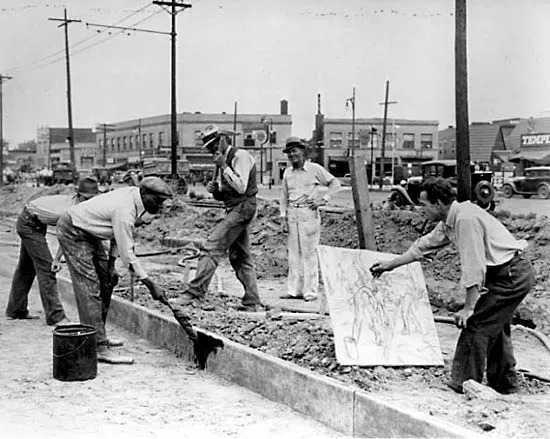
WPA Federal Art Project Michigan artist Alfred Castagne sketching WPA construction workers, 1939 © Britannica
Amid the widespread unemployment and severe financial hardship of the Great Depression, the US government launched the Federal Art Project to support artists across the country. This initiative provided early encouragement to names such as Jackson Pollock and Mark Rothko, whose explorations during this decade played a formative role in what would become Abstract Expressionism—one of the most influential and valuable movements in Modern art. What emerged was proof that social strain can stir up artistic ambition and lay the groundwork for future blue-chip art value.
Weimar Germany (1920s)
Against a backdrop of hyperinflation, political unrest and profound economic inequality, artistic experimentation flourished during the Weimar Republic. Still struggling to establish democratic order after World War I, the era produced Expressionism and Dadaism, which emerged as pointed responses to this instability. Artists such as George Grosz and Otto Dix channelled the disillusionment of the period into searing social commentary, producing works that captured the anxieties and contradictions of everyday life. Rather than disappearing under the weight of crisis, artistic innovation persisted throughout the decade, offering a vivid reminder that creativity often adapts, and sometimes intensifies, when the wider world feels uncertain.
The 2008 Financial Crisis
Even as global markets spiralled during the financial crisis of 2008, the art world sent a powerful signal of resilience. Damien Hirst’s landmark Beautiful Inside My Head Forever auction at Sotheby’s generated £111 million ($198 million)—a record-breaking result for a single-artist sale. At the very moment financial systems were buckling, collectors were continuing to place high conviction in art as an alternative investment.
The COVID-19 Pandemic (2020-2021)

Pandemic lockdowns throughout the world closed galleries, museums and public spaces, yet the crisis sparked one of the most dynamic artistic shifts of the decade. Street artists adapted their practice, digital art surged and online sales accelerated dramatically. Demand grew for Street artists like Banksy, Stik and Invader, with the global art market rebounding to $65.1 billion in 2021, surpassing pre-pandemic levels. Once again, creativity thrived when conditions were most constrained, and collectors recognised the stability of art as an asset class, even amid global uncertainty.
As these examples illustrate, periods of adversity have repeatedly heightened the cultural and financial impact of art, helping lay the groundwork for the next generation of investment-worthy work.
Booms Follow Busts: How Recoveries Unlock Record-Breaking Art Markets
Times of instability often ignite creative energy, but the market impact is frequently realised later, during times of renewed economic confidence. When liquidity returns to global markets and optimism rebuilds, collectors typically return with renewed ambition, driving competition for quality artworks and increasing prices. These recovery periods have repeatedly set the stage for some of the most transformative chapters in the art market’s evolution:
Post-WWII Expansion (1950s-1960s)
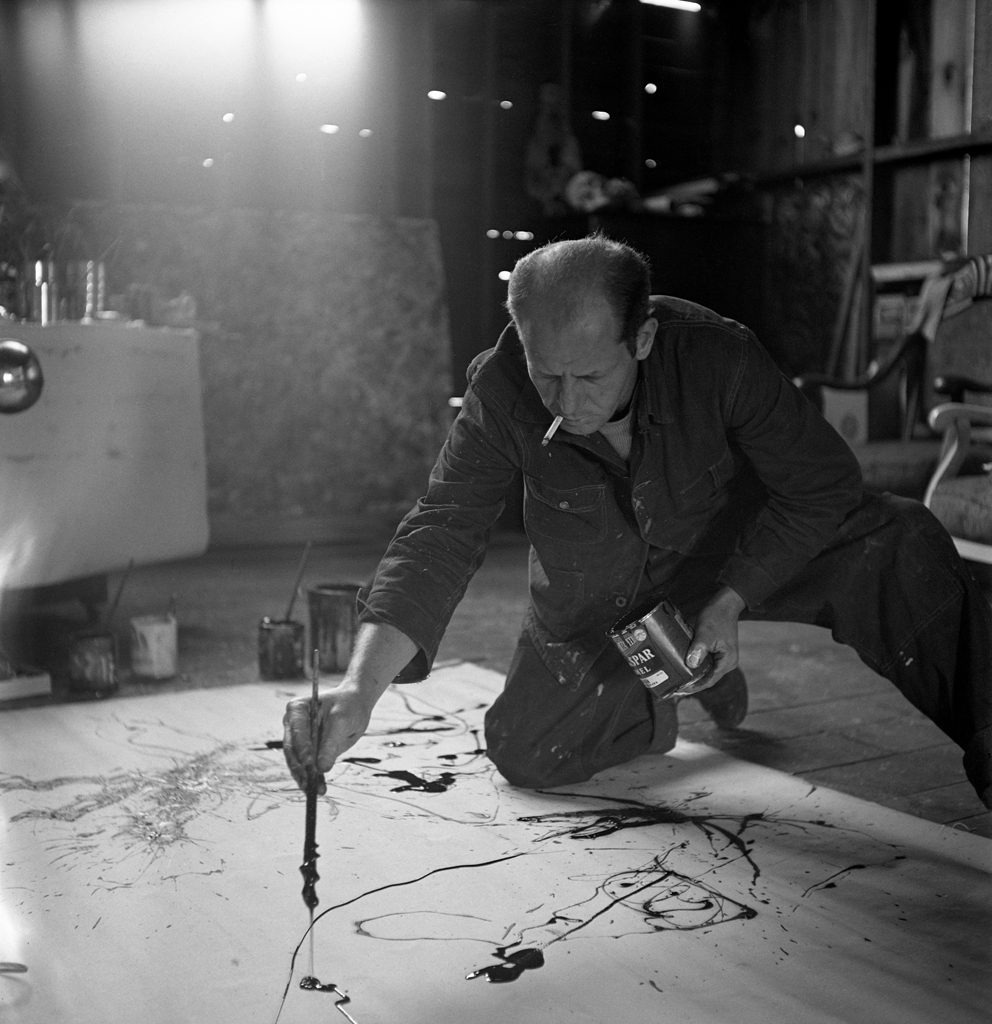
Jackson Pollock worked in his Long Island studio, 1949. © Martha Holmes/Life Pictures/Shutterstock
In the wake of wartime austerity, rising prosperity in the United States created fertile ground for a new wave of artistic influence. The post-war boom introduced a generation of collectors to Abstract Expressionism and, later, Pop Art, sparking unprecedented demand for the era’s leading voices. As economic confidence surged, so too did the appetite for Modern art, helping shape the market’s trajectory for decades.
The 1980s Market Surge
The financial exuberance of the 1980s fuelled a rapid rise in global art prices. Neo-Expressionism, led by artists such as Jean-Michel Basquiat and Julian Schnabel, captured the spirit of the decade, and the speculative enthusiasm surrounding their work contributed to some of the era’s most impressive price accelerations.
The Post-Pandemic Boom and 2022 Peak
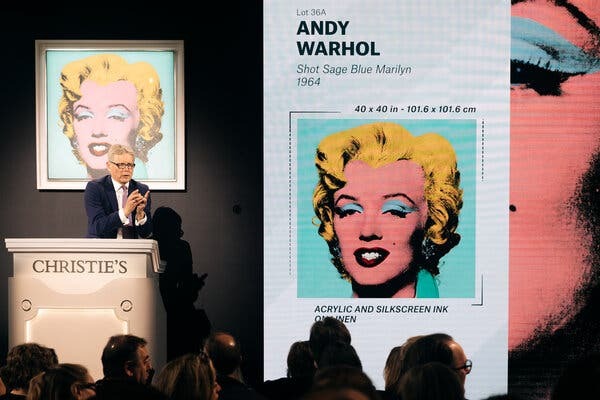
“Shot Sage Blue Marilyn,” a 1964 Andy Warhol silkscreen, auctioned at Christie’s © Andy Warhol Foundation for the Visual Arts, Inc./Artists Rights Society (ARS), NY; Jeenah Moon for The New York Times
A similar pattern emerged in the aftermath of the COVID-19 pandemic. As global markets rebounded and liquidity returned, collectors pursued blue-chip and emerging names with renewed vigour. In 2022, Andy Warhol’s Shot Sage Blue Marilyn sold for $195 million—the highest auction price ever achieved for an American artist—signalling the strength of the market when market sentiment resurfaces.
Viewed over the long arc of history, recoveries tend to push the art market into new territory, often validating the choices of collectors who were active during more challenging periods.
Why Now Is an Optimal Time to Invest: Opportunity in an Uncertain Market
Current economic conditions, marked by inflation, fluctuating interest rates and broader market volatility, have encouraged many investors to reassess how they allocate capital. In turn, this has brought a familiar question back into focus: what is the safest investment during a recession?
As traditional asset classes experience pressure, the relationship between art and economy has come into sharper focus, with art increasingly positioned as an asset class with lasting cultural and financial strength. This shift has opened up a window of art investment opportunities that feels particularly well-timed for collectors considering their options for the safest investment during recession periods:
Scarcity and Innovation in Challenging Times
Economic pressure has long been a catalyst for artistic innovation. Constraints often prompt artists to work more intuitively, more resourcefully and with greater urgency. The result is work that not only reflects the tenor of the moment, but which can also carry significant long-term value. For collectors, this creates an environment in which new voices emerge and established artists push their practice in unexpected directions, often before the market fully catches up.
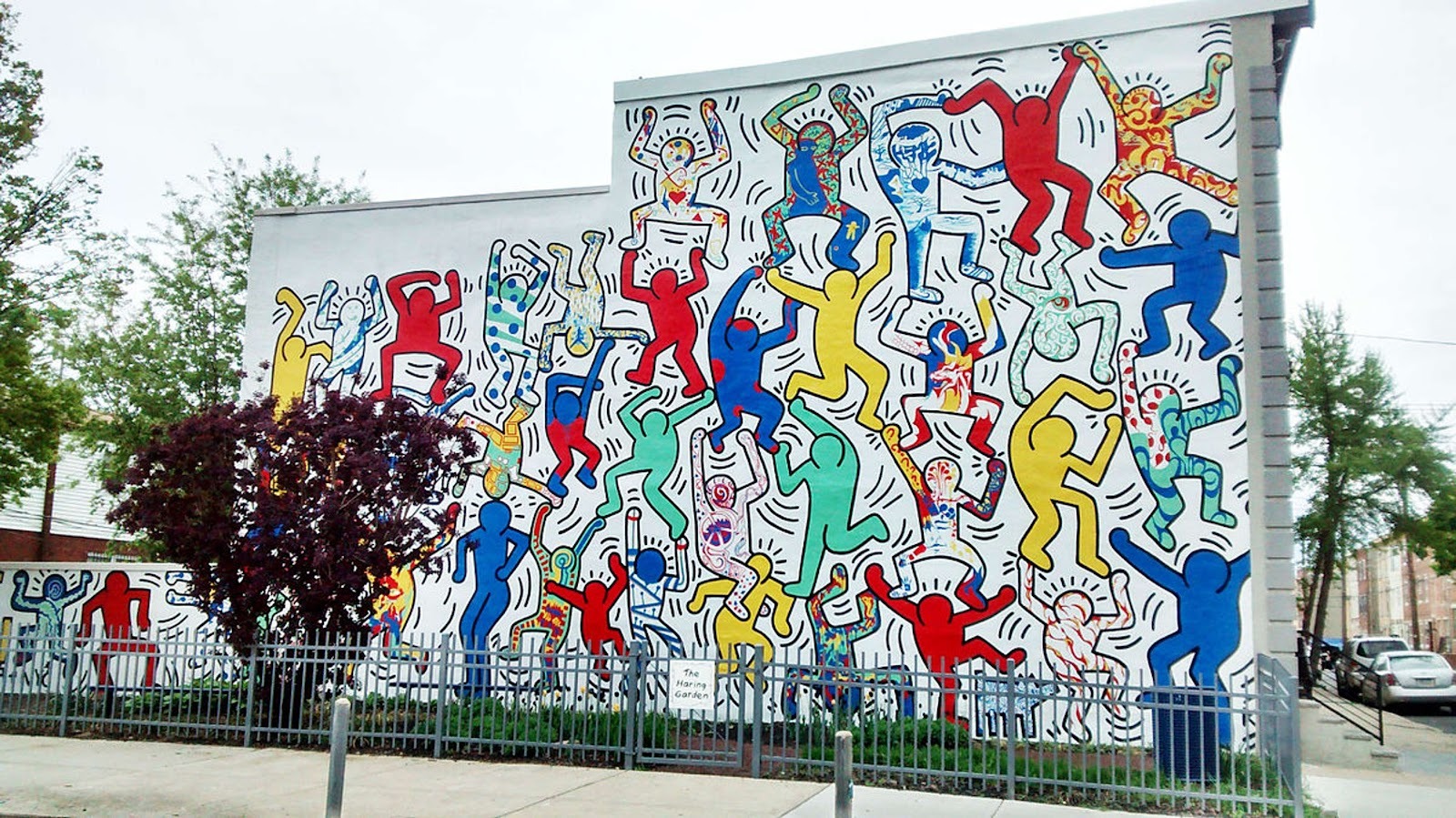
Keith Haring, We The Youth, a collaborative public mural from 1987 still intact in its original site © Keith Haring
Market Accessibility Through Prints and Editions
At the same time, the growing strength of the editioned prints market has made collecting more accessible. Prints allow collectors to acquire work by leading Contemporary artists at lower entry points while still benefiting from strong demand and liquidity. In a climate where many are considering what is the safest investment during a recession, editions offer a strategic way to diversify, participate and build a collectionwithout taking on the financial commitment required for unique artworks. Learn more about how to spot the most valuable prints.
Long-Term Appreciation Across Market Cycles
Historical trends underline the resilience of the art market during recession years. Works acquired during downturns frequently outperform once economic confidence returns, benefiting from renewed demand and increased competition. This independence from traditional financial markets is a key reason many investors now view art as an alternative investment that enhances a diversified portfolio, rather than competing with it.
Conclusion
There’s a reason why art has endured wars, revolutions and global financial crises: it holds cultural value that transcends economic cycles. Creativity often intensifies during challenging periods, and as confidence returns, those works are often met with renewed attention and rising demand. For today’s collectors, recognising the intersection of scarcity, creativity and lasting potential can unlock not only cultural enrichment, but also substantial financial returns.
Contact a Maddox Art Advisor to explore or invest in Contemporary art.
The value of investments can go down as well as up, and past performance is no guarantee of future performance. Return figures shown are gross; fees, including a 20% performance commission, may apply. Liquidity is not guaranteed. Terms, limitations, and withdrawal conditions apply. Minimum recommended investment is £20,000. Maddox Advisory is not FCA-regulated and does not give financial advice. Seek independent advice before investing.
READ MORE


Previous
Next
Basket
Please note items are not reserved until you have completed checkout.
No items found
Close
Your saved list
This list allows you to enquire about a group of works.
No items found
Enter your email to subscribe to our weekly newsletter.
Speak to a Maddox Art Advisor
Please enter your details below and someone from Maddox Gallery will call or email you back.
Mikael B
Register your interest in
Mikael B
Ross Muir
Register your interest in
Ross Muir
Andy Gotts
Register your interest in
Andy Gotts
Seb Chaumeton
Register your interest in
Seb Chaumeton
Miaz Brothers
Register your interest in
Miaz Brothers
The Connor Brothers
Register your interest in
The Connor Brothers
Jerkface
Register your interest in Jerkface.

Register your interest in

London
Gstaad
Los Angeles


