
December 18, 2025
In an uncertain world, the power of art collecting endures even when financial markets falter. Far more than passion or prestige; collecting art remains one of the most robust ways to build cultural legacy and generational wealth. It’s why so many ultra-high-net-worth collectors see art as a reliable vehicle for generational wealth transfer and lasting heritage.
There’s a reason great art has survived wars, revolutions and economic turbulence. While other assets rise and fall, great art holds its ground. Over time it moves beyond its owners, gaining significance and becoming part of a wider cultural story. In a moment when many investments can feel fleeting, collecting art offers something steadier: a store of value that can travel from one generation to the next, connecting families and carrying its cultural legacy onwards in a way few assets can match.
At Maddox, we’ve spent the past decade witnessing how art collecting can become a tangible part of a family’s history. Collections don’t remain static—they grow in step with the people who live alongside them. What often surprises collectors is how quickly a single acquisition becomes the foundation of something longer-term: the start of a collection that future generations will come to recognise and reinterpret in their own way.
|
Collector Insight: Art Collecting as Cultural Legacy & Generational Wealth Planning Art has the potential to become a powerful bridge between generations, carrying both meaning and long-term value.
|
Art’s Place in the Story of Civilisation: How Cultural Legacy Is Preserved

Keith Haring, Apocalypse II (1988)
Throughout history, art has been treated as something worth saving. In wartime, families hid cherished works and institutions acted quickly to shield their collections. The Monuments Men risked their lives to recover looted masterpieces, while the Louvre moved icons like the Mona Lisa to secret locations.
That instinct hasn’t faded. Whether protecting works during conflict or caring for collections over time, people recognise the power of art to preserve the heritage we all share. Art endures because societies understand what it represents—and defend it with extraordinary care.
Art as Heritage: Why Art Outlasts Every Other Asset
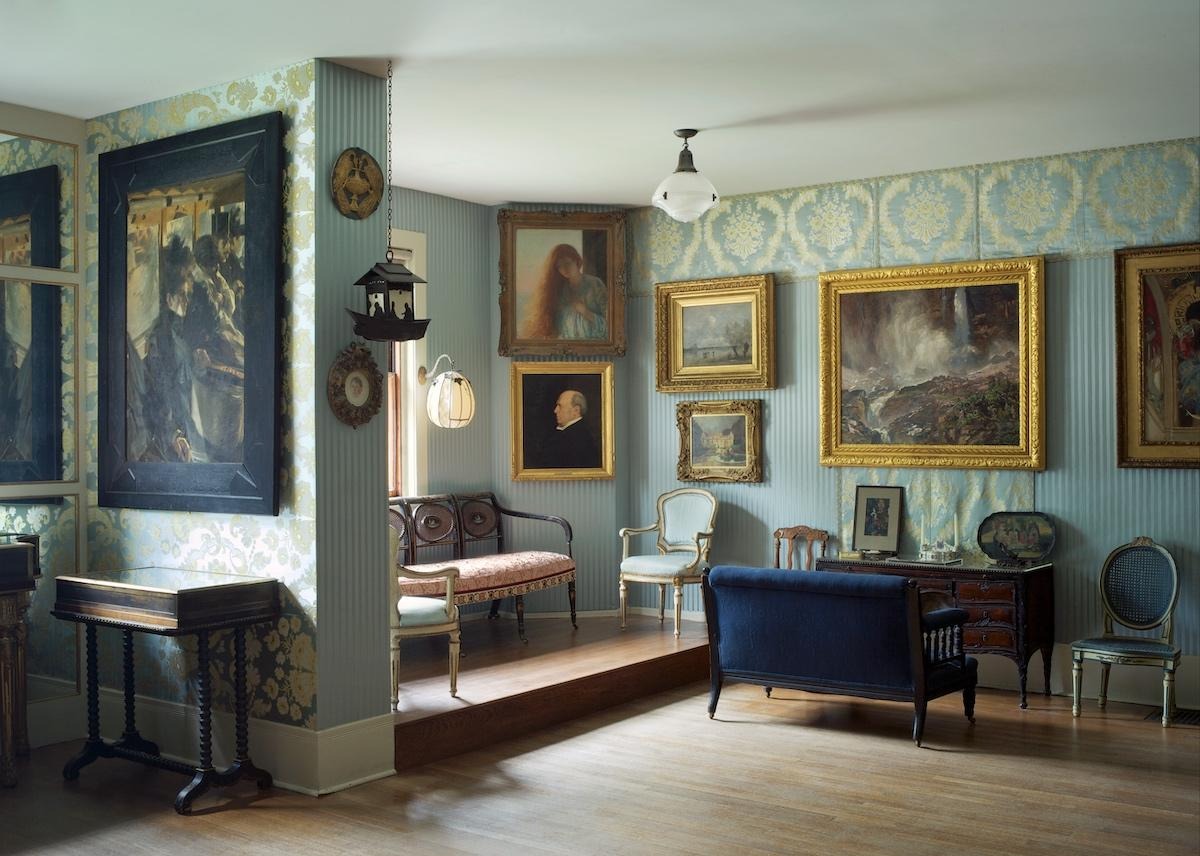
Raphael Room. Isabella Stewart Gardner Museum, Boston. Photo: Sean Dungan, 2018.
Art carries something no other possession can: the presence of the person who made it—their hand, their ideas and their way of seeing the world. A Matisse isn’t just valuable; it’s something you live alongside, revealing different qualities as the years go by. This is why certain works stay with collectors for decades, eventually becoming heirloom art that later generations relate to as naturally as those who lived with it first.
Some of the clearest examples of art becoming a broader cultural legacy come from collectors whose private choices ultimately found their way into the public realm. Isabella Stewart Gardner arranged her collection with such precision that her museum still mirrors her original vision more than a century later. J. Paul Getty’s fascination with antiquities grew into an institution that holds some of the world’s most studied works. Neither imagined the scale their collections would one day reach, yet their choices now belong to everyone.
Passing Down Heirlooms: When Art Becomes Part of the Family

Pablo Picasso‘s The Dream, 1932, for sale at Christie’s during the November 1997 auction of the Ganz collection. AP Photo/Emile Wamsteker
Art moves through time in a way few possessions can. Houses need restoring, cars lose their shine and technology becomes old almost as soon as it’s unboxed, yet a great artwork only enriches lives as the years pass.
As artworks move through a family, their significance shifts. A painting that begins as a personal favourite can become part of someone else’s earliest recollections. Years later, a piece often stays in the family because it holds the memories and meaning they’ve built around it. This is how art becomes woven into a family’s identity: not through contracts or valuations, but through the familiarity of living with it.
A striking example of how a collection can gain stature over time is the 1997 Christie’s auction of the Victor and Sally Ganz fine art estate. The 58 works offered ranged from Jasper Johns and Robert Rauschenberg to Frank Stella and Eva Hesse, yet it was the group of Picassos that captured global attention. Picasso’s market was still evolving, which made the outcome all the more remarkable. More than 2,000 people filled the room as the collection achieved $206.5 million—almost $400 million today—setting a new record at the time for a single-owner sale and cementing the Ganz name in collecting history.
And the story didn’t end there. After the auction, works from the Ganz collection entered notable private and institutional holdings, reaching wider audiences in the process. Picasso’s Les femmes d’Alger (Version “H”), for instance, became part of the Nahmad Collection in Switzerland and has since been loaned to Tate Liverpool and the Royal Academy in London. Art moves on, gathering fresh context and meaning with each new setting, its life extending far beyond any one collector.
The Power of Art Collecting: The Connection Money Can’t Buy

David Hockney, In Front of House Looking West (2019), Edition of 35
No one stands before a stock portfolio and is moved to tears. But art? It stirs something deep. It can move you, challenge you or illuminate something you didn’t realise you felt. That ability to speak to us so directly is why collectors hold certain pieces so closely. Over years of living with a work, it gathers layers of memory. When heirloom paintings are eventually passed on, it’s this lived history that goes with them, offering something much more intimate than a financial asset.
Buying art is, at its core, a decision to think beyond the moment. Collectors know that the life of a painting or sculpture carries on well after their own. That perspective gives art a unique role within conversations about the legacy of art and generational wealth planning: it holds value and longevity, but also the ability to be continually questioned and understood in different ways.
|
Collector Insight: Turning a Collection into a Legacy Art Estate With considered planning, a personal collection can evolve into a legacy that is protected and preserved over time.
|
Art’s Role in Generational Wealth Planning: How Collectors Build Legacy Across Generations
In modern generational wealth planning, art is increasingly treated in the same bracket as property and business assets as something that can be transferred, preserved and managed across generations. Unlike other assets, however, a legacy art collection sits at the intersection of emotional attachment and financial value. Decisions about whether heirloom paintings should be kept, gifted, sold or donated are rarely just transactional; they touch on questions of identity, family history and how you want your cultural legacy to be remembered.
This is where specialist guidance becomes invaluable. A well-structured plan helps families decide which pieces they want to keep within the family, which works may be sold—whether privately or through consignment—to support future needs, and how best to organise the transition of a fine art estate over time. For some, that means passing certain works directly to heirs; for others, it means gifting pieces to museums so they can be enjoyed more widely. However it’s arranged, treating art as part of the longer-term conversation around generational wealth transfer ensures that collecting art is not only about what you own today, but about how that collection will be understood, protected and enjoyed well beyond the present moment.
Conclusion: The Return That Can’t Be Measured
Art is one of the few assets that grows alongside the people who live with it, gathering significance rather than diminishing with time. For many collectors, the strongest return comes from knowing that a work will continue to matter—to future viewers and generations—long after it leaves their possession. It’s this sense of continuity, rather than any market metric, that turns a collection into a legacy.
Speak to a Maddox Advisor to begin your art collecting journey.
READ MORE


Previous
Next
Basket
Please note items are not reserved until you have completed checkout.
No items found
Close
Your saved list
This list allows you to enquire about a group of works.
No items found
Enter your email to subscribe to our weekly newsletter.
Speak to a Maddox Art Advisor
Please enter your details below and someone from Maddox Gallery will call or email you back.
Mikael B
Register your interest in
Mikael B
Ross Muir
Register your interest in
Ross Muir
Andy Gotts
Register your interest in
Andy Gotts
Seb Chaumeton
Register your interest in
Seb Chaumeton
Miaz Brothers
Register your interest in
Miaz Brothers
The Connor Brothers
Register your interest in
The Connor Brothers
Jerkface
Register your interest in Jerkface.

Register your interest in

London
Gstaad
Los Angeles


